ל
7 min read
•Rosh Hashanah 2026: Date, Biblical Meaning and How the Jewish New Year is Celebrated
When is Rosh Hashanah in 2026?
Rosh Hashanah 2026 begins at sunset on Friday, September 11, with the first day (1 Tishrei) falling on Saturday, September 12, and the second day (2 Tishrei) on Sunday, September 13, ending at nightfall that Sunday. This is the verified date for the Hebrew year 5787 — because the Hebrew calendar is lunisolar, the Gregorian date shifts every year and never falls on exactly the same day.Rosh Hashanah opens the month of Tishrei, the seventh month of the biblical calendar (counted from Nisan, the month of the Exodus), and begins the Ten Days of Awe that culminate in Yom Kippur, on September 21, 2026.
What is Rosh Hashanah?
Rosh Hashanah (ראש השנה, literally "head of the year") is the New Year of the Hebrew civil calendar. In rabbinic tradition it is also called Yom Harat Olam — the day that commemorates the creation of the world — and it is the moment when divine judgment over humanity is renewed for the year ahead.The biblical name for the day, however, is not "Rosh Hashanah": Scripture calls it Yom Teruah, the Day of the Blast of the Trumpet (or Shofar). In Jewish tradition Rosh Hashanah lasts two days (1 and 2 Tishrei), treated as "one long day" (yoma arichta) because of the historical uncertainty about the exact moment of the new moon.
Zeman
Discover your biblical tribe
Enter your date of birth and receive your free biblical profile.
Rosh Hashanah in the Bible: the Feast of Trumpets
The biblical basis for Rosh Hashanah is Leviticus 23:24-25, which establishes the first day of the seventh month as a day of rest, a memorial proclaimed with the blast of trumpets and a holy convocation, with a burnt offering to the Lord. Numbers 29:1-6 adds the specific sacrificial offerings for that day.Blowing the shofar (a ram's horn) is the central element prescribed in the biblical text — traditionally sounded 100 times through the day, except when the date falls on Shabbat, in which case the blast is postponed to the second day. In 2026 the first day of Rosh Hashanah (September 12) falls precisely on a Saturday — so the shofar will be sounded on the second day, Sunday, September 13. The sound of the shofar is understood as a call to spiritual awakening and to repentance.
How Rosh Hashanah is celebrated
Traditional Rosh Hashanah observance includes:
- •Blowing the shofar in the synagogue, the central biblical commandment of the day
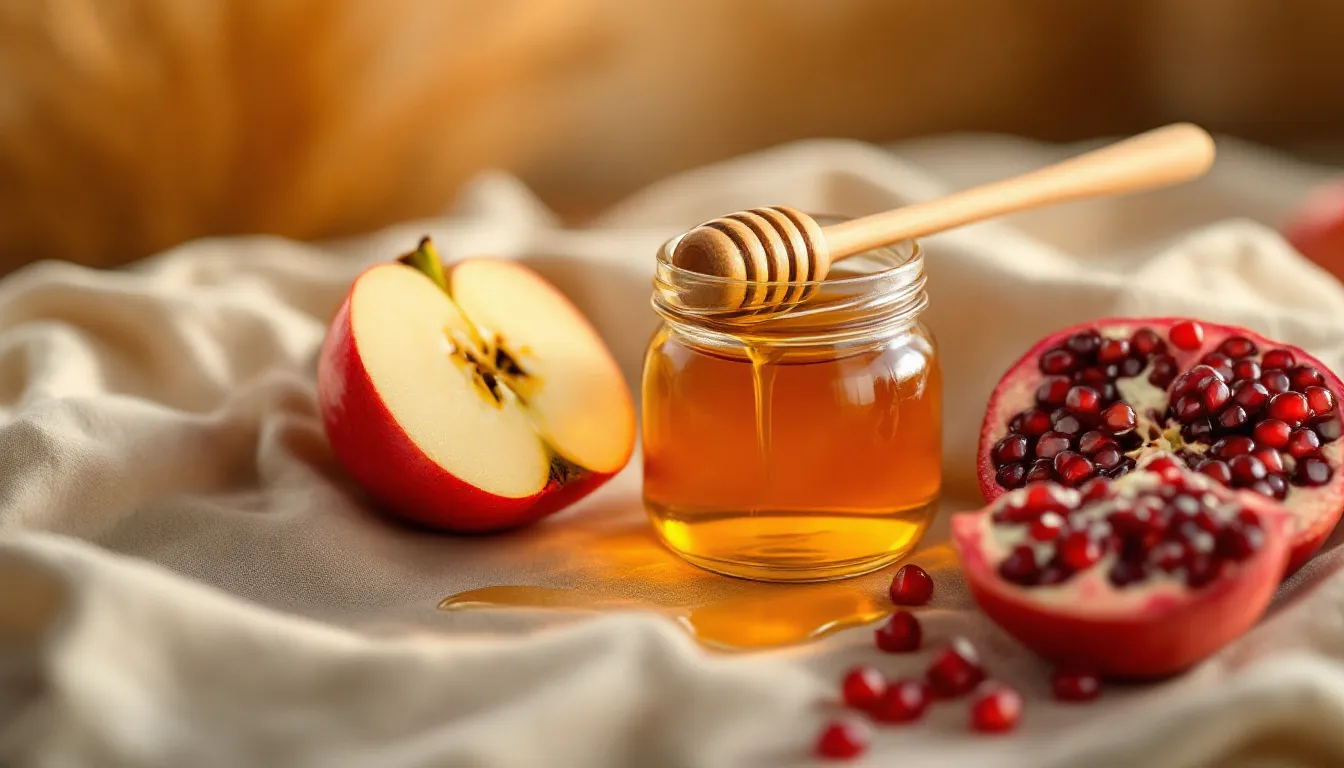
- •Apple dipped in honey, eaten at the start of the festive meal as a wish for a sweet year
- •Round braided bread (challah), instead of the usual elongated shape — the circle stands for the continuity of the year's cycle and for divine kingship
- •Tashlich, the custom of going to a river, the sea or another body of flowing water and symbolically "casting" one's sins into it, based on Micah 7:19 ("you will cast all our sins into the depths of the sea")
- •Rest from laborious work, as prescribed in Leviticus 23:25
- •Special prayers and liturgy from the Machzor, the festival prayer book
The Ten Days of Awe: from Rosh Hashanah to Yom Kippur
Rosh Hashanah opens the Yamim Noraim — the Ten Days of Awe (or Days of Repentance) — a ten-day period that ends on Yom Kippur, the Day of Atonement, the holiest day of the Hebrew calendar. In 2026, Yom Kippur falls on September 21 (10 Tishrei).In rabbinic tradition these ten days are described as a window in which the year's divine judgment is still "open" — hence the custom of intensifying prayer, repentance (teshuvah) and acts of charity during this period. That is why Rosh Hashanah is not observed in isolation: it is the gateway into the most solemn stretch of the Hebrew year.
Rosh Hashanah and the month of Tishrei in your Biblical Map
In the Hebrew calendar system Zeman uses, Tishrei — the month Rosh Hashanah inaugurates — is associated with the tribe of Ephraim, with the stone Shoham (Onyx) from the High Priest's breastplate (Exodus 28), and with the Hebrew letter ל (Lamed), following the tradition of the Sefer Yetzirah. Those born in Tishrei carry, according to this reading, the character of multiplication and leadership attributed to Ephraim in Jacob's blessing in Genesis 48, and to Joseph, Ephraim's father, in Genesis 49.If you were born around September or October, your Hebrew month may be Tishrei — but the exact conversion depends on the year and on the specific day of your birth, since the Hebrew calendar does not line up with the Gregorian one in a fixed way.
Discover your Tribe and your Hebrew Month with Zeman
Rosh Hashanah marks the turn of a whole year in the calendar that also determines your tribe of Israel, your Hoshen stone and your personal biblical map. Zeman converts your Gregorian birth date to the Hebrew calendar automatically, with verified astronomical algorithms — the same system used in this article to confirm the date of Rosh Hashanah 2026.Generate your personal biblical map now, for free, and discover which tribe, month and Hoshen stone your birth date belongs to.