ד
7 min read
•Hoshen Stones: The 12 Precious Stones of the Priestly Breastplate
What Is the Hoshen?
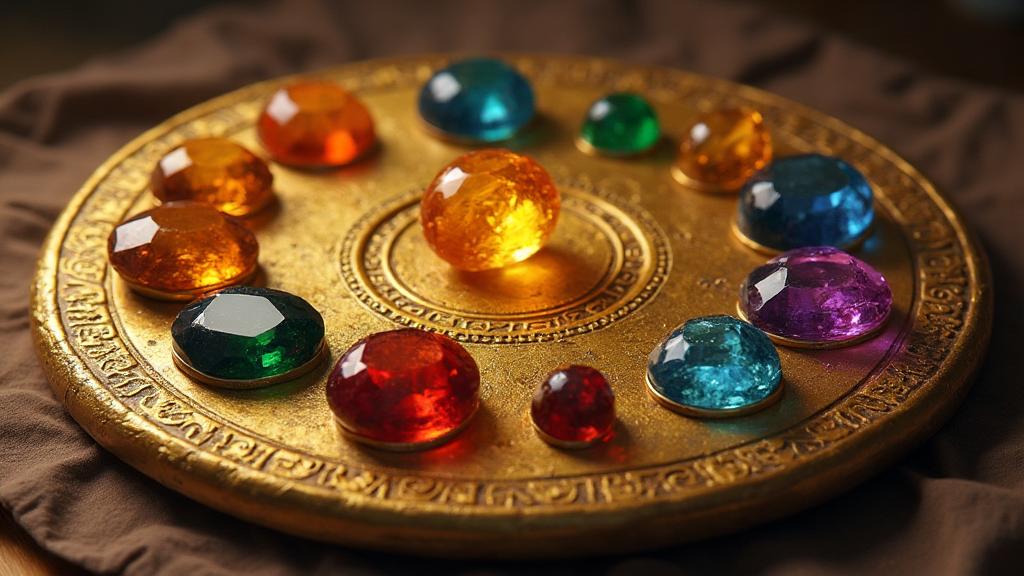
The Hoshen (חושן) was the breastplate worn by the High Priest (Cohen Gadol) in the Temple in Jerusalem. Described in detail in Exodus 28:15–30, it was a square piece made of fine fabric and adorned with 12 precious stones arranged in four rows of three.
Each stone represented one of the 12 tribes of Israel and had the tribe's name engraved on it. The Hoshen was considered one of the holiest objects in Temple service, used to seek divine guidance.
The 12 Stones and Their Tribes
According to Exodus 28:17–20, the stones of the Hoshen are:
First row:
• Sardonyx (Odem) — Reuben
• Topaz (Pitdah) — Simeon
• Carbuncle (Bareketh) — Judah
Second row:
• Emerald (Nofekh) — Dan
• Sapphire (Sapir) — Naphtali
• Diamond (Yahalom) — Gad
Third row:
• Jacinth (Leshem) — Asher
• Agate (Shevo) — Issachar
• Amethyst (Achlamah) — Zebulun
Fourth row:
• Beryl (Tarshish) — Ephraim
• Onyx (Shoham) — Manasseh
• Jasper (Yashfeh) — Benjamin
Spiritual Meaning of the Stones
In Jewish tradition, each stone was not merely decorative — it carried deep spiritual meaning. The color, brilliance, and properties of each gem reflected the qualities of the tribe it represented.
For example, Judah's Carbuncle (a bright red stone) symbolizes leadership and courage — qualities for which Judah was known. Naphtali's Sapphire represents wisdom and eloquence, characteristics attributed to that tribe in scripture.
When the High Priest entered the Holy of Holies wearing the Hoshen, he symbolically carried the whole people of Israel upon his heart.
Your Personal Stone
In Zeman's Biblical Map, each person receives their Hoshen stone based on their Hebrew birth month. This stone serves as a tangible symbol of your spiritual identity — a direct connection to the tradition of the Temple in Jerusalem.
Knowing your stone is more than curiosity: it is recognizing the place you occupy in biblical history and the qualities your tribe has valued and cultivated for millennia.